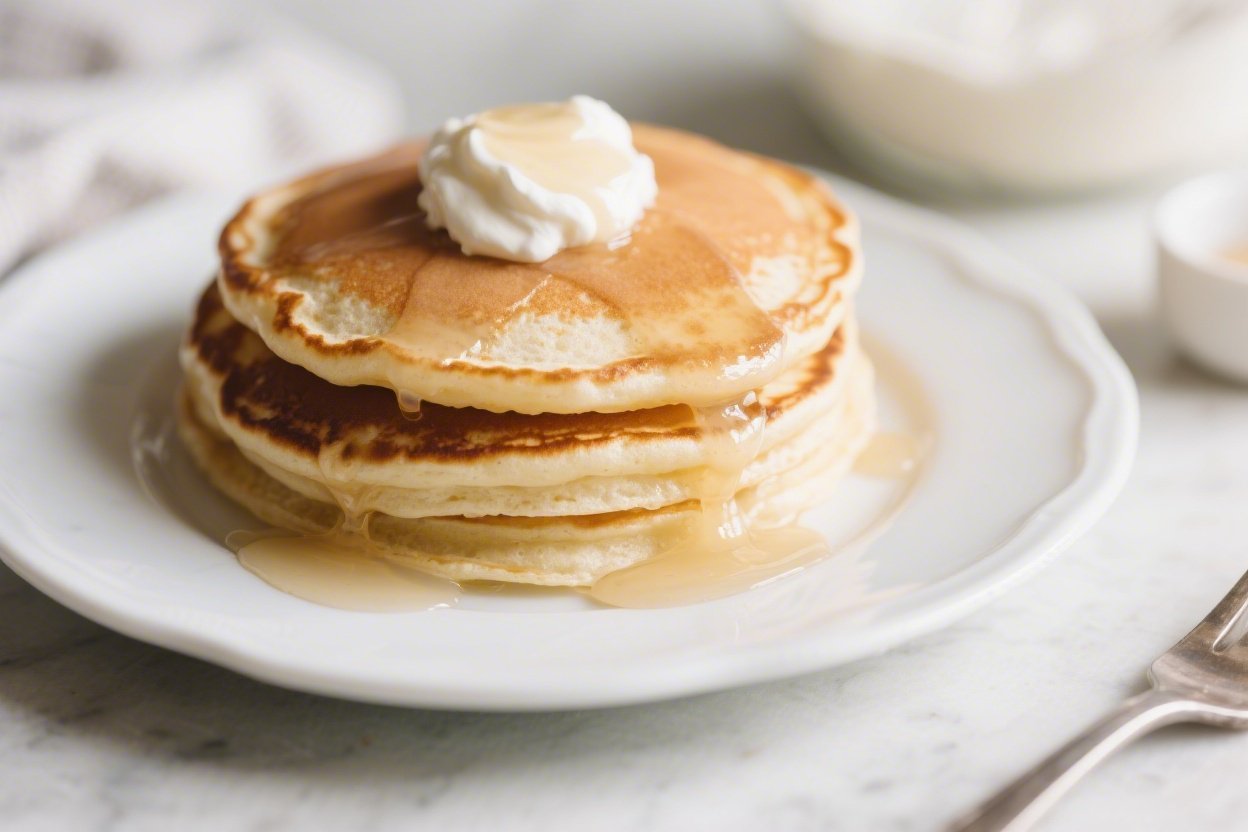

If you’re craving stack-after-stack of soft, golden, fluffy pancakes, you’ve come to the right place. This recipe delivers tender middles, lightly crisp edges, and a flavor that’s just sweet enough. It’s fast, foolproof, and uses pantry staples you probably already have.
Whether it’s a slow Sunday morning or a busy weekday, these pancakes come together easily and cook up like a dream.

What Makes This Recipe So Good
- Extra fluffy texture: A smart balance of baking powder and a touch of baking soda keeps the pancakes tall and airy.
- Everyday ingredients: Nothing fancy here—just basic pantry items you can grab without a special trip.
- Quick to make: The batter mixes in minutes and cooks fast, so breakfast is on the table in no time.
- Consistent results: Clear steps and simple ratios mean you’ll get great pancakes every time.
- Easy to customize: Add blueberries, chocolate chips, or spices without changing the base recipe.
Ingredients
- 1 1/2 cups (190 g) all-purpose flour
- 2 tablespoons granulated sugar
- 2 teaspoons baking powder
- 1/4 teaspoon baking soda
- 1/2 teaspoon fine salt
- 1 1/4 cups (300 ml) milk, plus more as needed
- 1 large egg
- 3 tablespoons unsalted butter, melted and slightly cooled (plus more for the pan)
- 1 teaspoon pure vanilla extract
- Optional add-ins: 1/2 cup blueberries or chocolate chips; pinch of cinnamon
Instructions
- Preheat your pan: Set a nonstick skillet or griddle over medium heat. Let it warm while you mix the batter so it’s evenly hot when you start cooking.
- Mix dry ingredients: In a medium bowl, whisk together the flour, sugar, baking powder, baking soda, and salt until well combined.
- Combine wet ingredients: In another bowl or large measuring cup, whisk the milk, egg, melted butter, and vanilla until smooth.
- Bring it together: Pour the wet mixture into the dry. Gently fold with a spatula until just combined.
A few small lumps are fine. If the batter feels too thick to pour, add 1–2 tablespoons of milk to loosen.
- Rest the batter (short and sweet): Let the batter sit for 5 minutes. This helps the flour hydrate and boosts fluffiness.
- Grease the pan: Lightly butter the skillet or spray with nonstick spray.
Wipe off excess so it doesn’t burn.
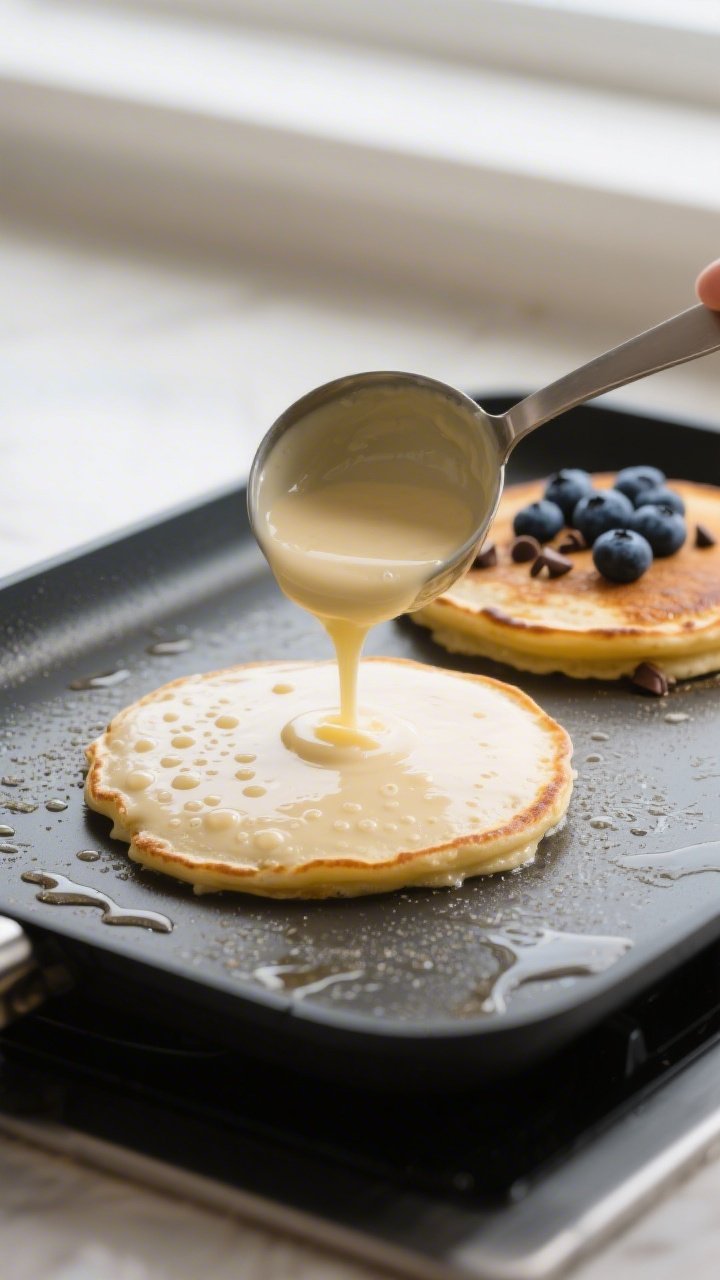
- Portion the pancakes: Scoop about 1/4 cup of batter per pancake onto the hot surface. If adding blueberries or chocolate chips, sprinkle them on top of each pancake now.
- Cook the first side: Cook until you see bubbles across the surface and the edges look set, about 2–3 minutes. The bottom should be golden, not dark.
- Flip gently: Turn with a wide spatula and cook 1–2 more minutes, until the second side is golden and the center feels springy.
- Adjust heat as needed: If the bottoms brown too fast, lower the heat slightly.
Keep the surface consistently medium to medium-low.
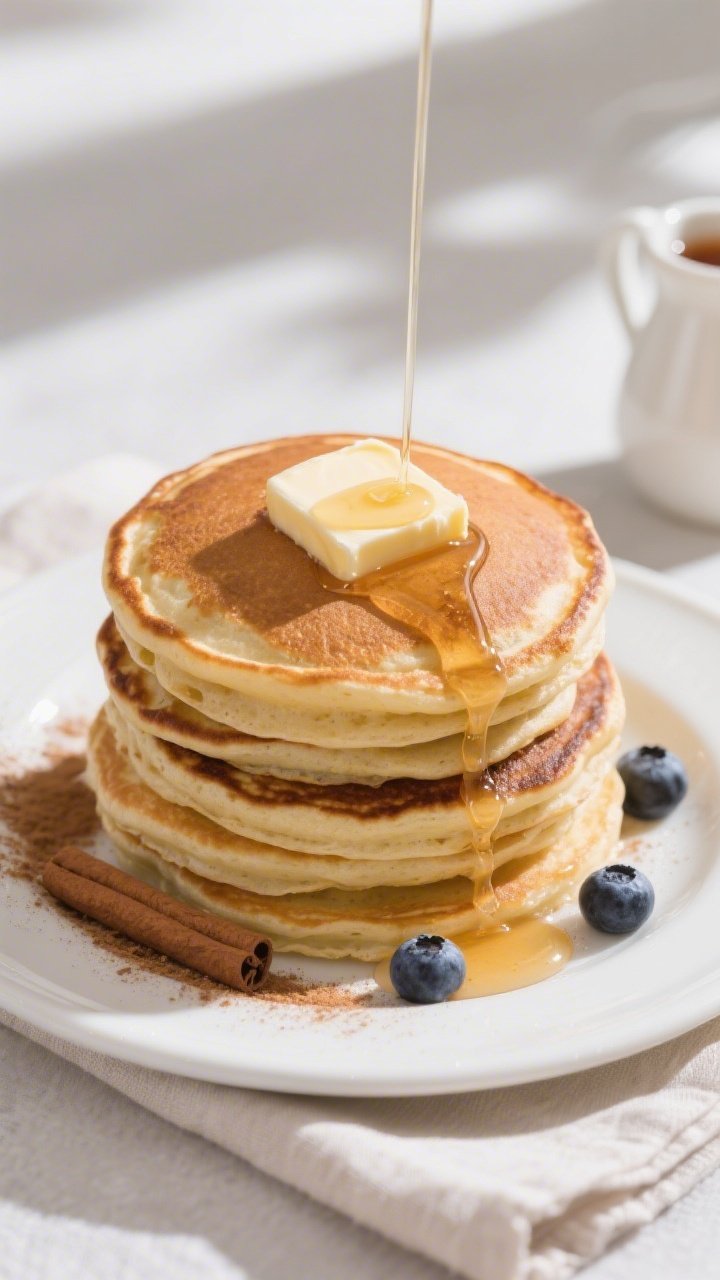
- Serve warm: Stack on a plate and serve right away with butter and warm maple syrup, or keep cooked pancakes on a baking sheet in a 200°F (95°C) oven while you finish the batch.
How to Store
- Refrigerate: Let pancakes cool completely. Store in an airtight container for up to 3 days. Reheat in a toaster, skillet, or 300°F oven for 5–8 minutes.
- Freeze: Arrange pancakes in a single layer on a baking sheet and freeze until solid.
Transfer to a freezer bag with parchment between layers. Freeze up to 2 months.
- Reheat from frozen: Toast on medium or warm in a 325°F (165°C) oven for 10–12 minutes. You can also microwave in short bursts, but they’ll be softer.
- Syrup strategy: Add syrup only after reheating so the pancakes don’t get soggy in storage.
Why This is Good for You
- Balanced comfort: While pancakes are a treat, this version keeps sugar modest and lets you control toppings.
- Energy that lasts: Pairing pancakes with protein (eggs, Greek yogurt, nut butter) helps steady energy through the morning.
- Customizable add-ins: Add blueberries for antioxidants, banana for potassium, or ground flax for fiber and omega-3s.
- Portion-friendly: Small, 1/4-cup pancakes make it easy to track servings and avoid overeating.
What Not to Do
- Don’t overmix: Overworking the batter makes tough, flat pancakes.
Stir just until the flour disappears.
- Don’t skip the rest: Even 5 minutes helps the batter relax and rise better on the griddle.
- Don’t cook too hot: High heat burns the outside before the inside sets. Medium heat is your friend.
- Don’t flip too early or often: Wait for bubbles and set edges, and flip once. Pressing down with the spatula squeezes out air and makes them dense.
- Don’t pour cold batter onto a cold pan: Heat matters.
A properly preheated surface ensures even browning and lift.
Alternatives
- Buttermilk swap: Use 1 1/4 cups buttermilk and reduce baking powder to 1 1/2 teaspoons. Keep the baking soda. Expect a tangy flavor and extra fluff.
- Dairy-free: Use almond, oat, or soy milk and swap butter for melted coconut oil or neutral oil.
Add a pinch more salt if using coconut oil.
- Whole wheat: Replace half the all-purpose flour with white whole wheat. Add 1–2 tablespoons more milk if the batter is too thick.
- Gluten-free: Use a quality 1:1 gluten-free baking flour blend. Let the batter rest 10 minutes for best texture.
- Protein boost: Stir in 2 tablespoons milk powder or a scoop (about 20 g) neutral protein powder.
Add a splash more milk to keep the batter pourable.
- Flavor twists: Try 1/2 teaspoon cinnamon, a pinch of nutmeg, lemon zest with blueberries, or almond extract in place of vanilla.
FAQ
How do I know when to flip the pancakes?
Look for small bubbles across the top and edges that look slightly dry. Lift a corner to check for a golden underside. That’s your cue to flip.
Why are my pancakes flat and tough?
Overmixing is the usual culprit.
Stir gently until the flour streaks disappear. Also check that your baking powder is fresh and the heat isn’t too high.
Can I make the batter ahead?
Yes, for a short time. Mix the dry and wet ingredients separately the night before and combine in the morning.
If you mix fully ahead, the leaveners lose power—expect less rise.
What’s the best pan to use?
A nonstick skillet or a well-seasoned griddle works best. Cast iron is great for even heat, but keep it at medium to avoid over-browning.
How can I make them extra fluffy?
Use buttermilk, don’t overmix, and let the batter rest. You can also separate the egg and fold in a lightly beaten egg white, but it’s optional with this recipe.
Can I reduce the sugar?
Yes.
You can cut it to 1 tablespoon or even skip it if you prefer savory pancakes. The texture will stay similar, though browning may be slightly lighter.
How do I keep the first pancakes warm?
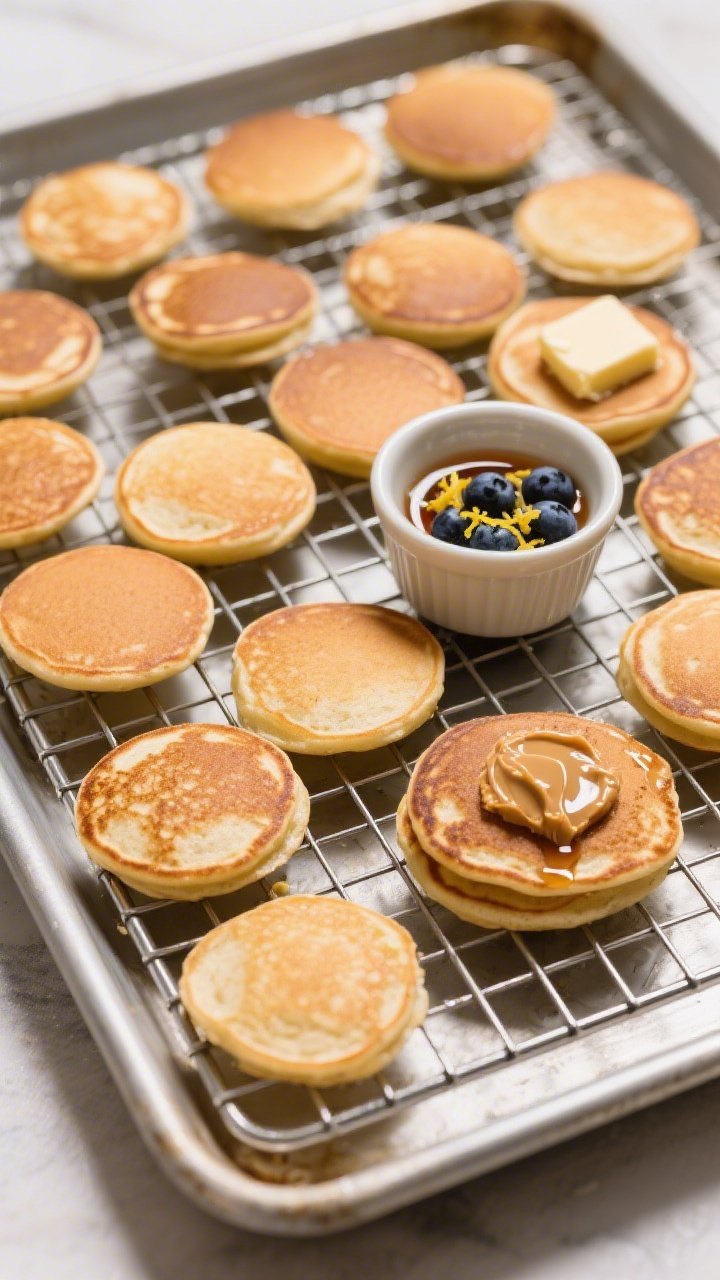
Place them on a wire rack set over a baking sheet in a 200°F (95°C) oven. The rack prevents steam from making them soggy.
Why are my pancakes raw in the middle?
Your heat is likely too high.
Lower the temperature so the outside doesn’t brown before the center cooks through. Slightly thinner batter also helps.
Can I make silver dollar pancakes?
Absolutely. Use about 1–2 tablespoons of batter per pancake and shorten the cook time.
They’re great for kids or for topping with fruit and yogurt.
What syrup alternatives work well?
Try warmed honey, fruit compote, a spoonful of lemon curd, or a drizzle of peanut butter or almond butter for extra protein.
Wrapping Up
These fluffy pancakes are simple, reliable, and endlessly adaptable. With a few smart tips—gentle mixing, a brief rest, and steady heat—you’ll get perfect results every time. Make them your own with add-ins and toppings, and enjoy a stack that’s as cozy on weekdays as it is on lazy weekends.
Happy flipping!
Printable Recipe Card
Want just the essential recipe details without scrolling through the article? Get our printable recipe card with just the ingredients and instructions.