
Starting your day with a low-carb breakfast doesn’t have to feel complicated or boring. With a few tasty staples and quick prep, you can enjoy satisfying meals that keep you full and focused. Here, you’ll find a complete guide to making a balanced keto breakfast plate, along with easy swaps and time-saving tips.
Think creamy eggs, crispy bacon, buttery greens, and a quick chia pudding you can prep ahead. Everything is designed to be simple, flexible, and genuinely delicious.
What Makes This Recipe So Good
- Fast and flexible: Most steps take under 20 minutes, and you can swap proteins and veggies based on what you have.
- Balanced macros: High in protein and healthy fats with low net carbs to keep you in ketosis.
- Meal-prep friendly: Make components ahead, like chia pudding or roasted veggies, to speed up mornings.
- Restaurant-level flavor: Simple seasoning and good technique bring out rich, savory taste without extra carbs.
- Customizable: Dairy-free, vegetarian, or nut-free options are easy to plug in without sacrificing flavor.
What You’ll Need
- Eggs: 2–3 large per person.
- Bacon or breakfast sausage: Sugar-free if possible. Turkey bacon works too.
- Avocado: Half per person for creaminess and healthy fats.
- Low-carb veggies: Spinach, kale, mushrooms, zucchini, bell pepper, or cherry tomatoes.
- Cheese (optional): Cheddar, feta, or goat cheese.
- Chia seeds: For a quick make-ahead chia pudding.
- Unsweetened almond or coconut milk: For chia pudding and scrambling eggs.
- Butter, ghee, or olive oil: For cooking.
- Seasonings: Salt, pepper, garlic powder, smoked paprika, chili flakes, everything bagel seasoning.
- Fresh herbs (optional): Chives, parsley, or basil.
- Low-sugar berries (optional): A few raspberries or blackberries for chia pudding topping.
- Extras (optional): Smoked salmon, leftover roast chicken, or canned tuna for added protein.
Step-by-Step Instructions
- Make the chia pudding base (night before): In a jar, mix 3 tablespoons chia seeds with 1 cup unsweetened almond milk, a pinch of salt, and a drop of vanilla extract.
Stir well, wait 5 minutes, stir again, then refrigerate overnight. In the morning, top with a few berries and a sprinkle of nuts or coconut flakes if desired.
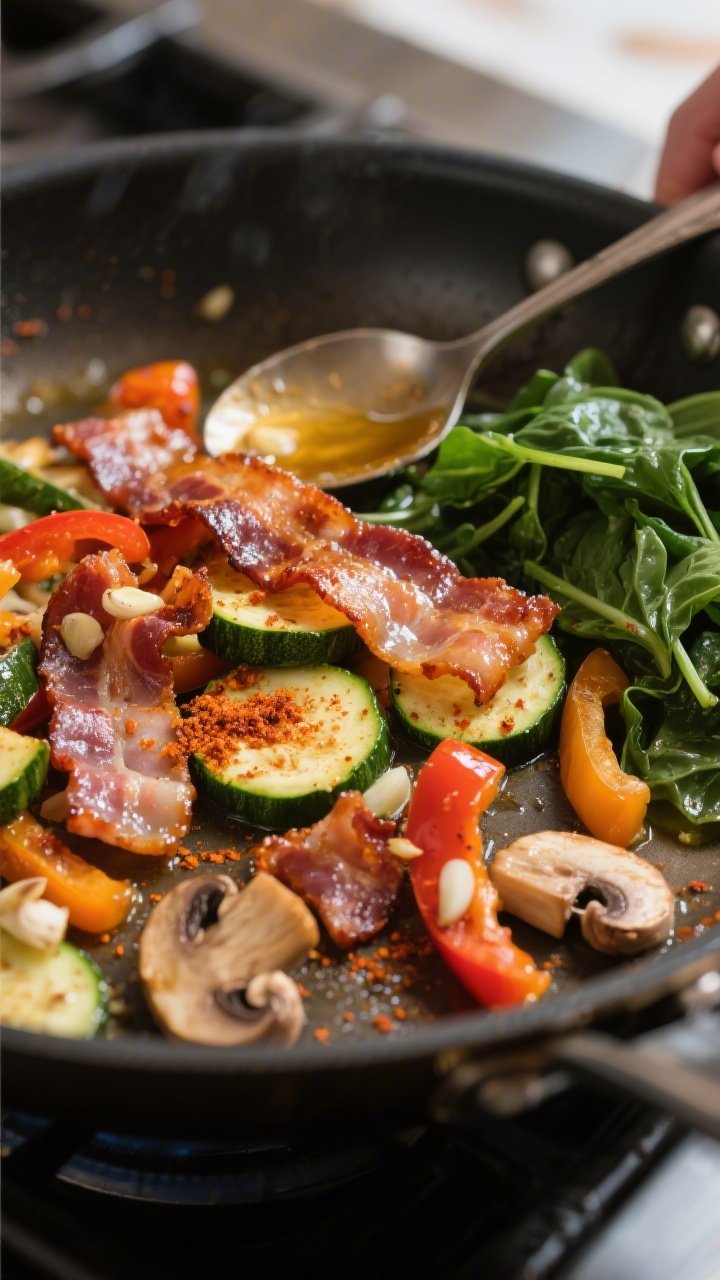
- Crisp the bacon or cook sausage: Heat a skillet over medium. Cook bacon until crisp, about 8–10 minutes, or brown sausage links/patties until cooked through.
Set aside on a paper towel–lined plate. Leave 1 tablespoon of rendered fat in the pan for extra flavor.
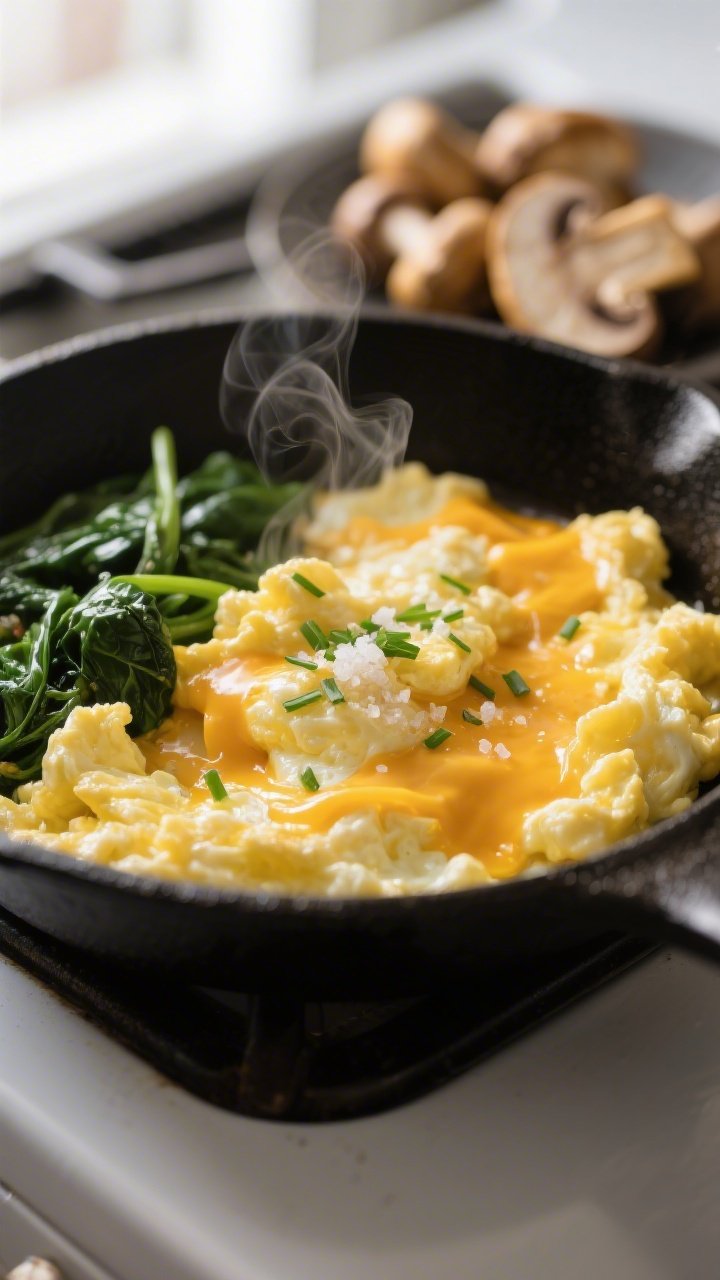
- Sauté the veggies: In the same pan, add sliced mushrooms, chopped bell peppers, or zucchini. Season with salt, pepper, and a pinch of garlic powder.
Cook 4–6 minutes until tender and lightly browned. Toss in a handful of spinach at the end and let it wilt.
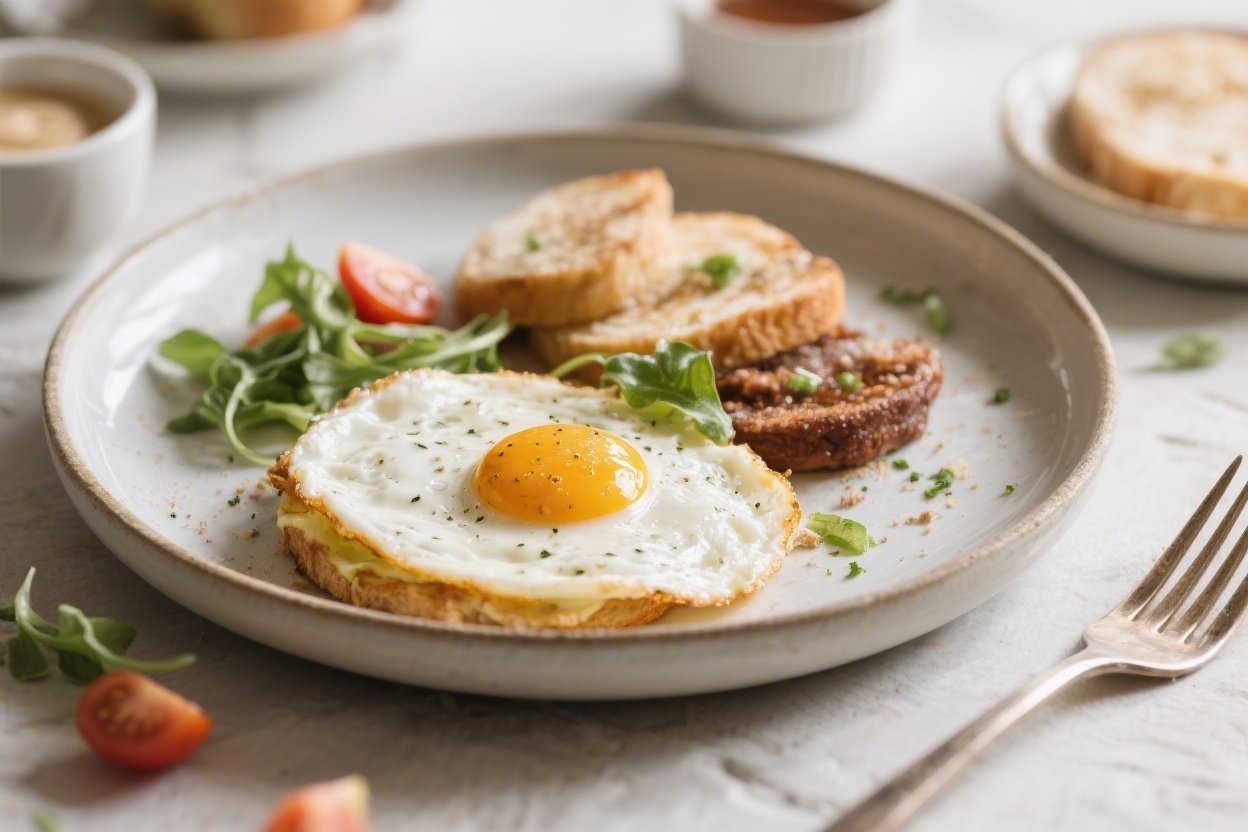
- Scramble or fry the eggs: For soft scrambled eggs, lower the heat. Add 1 teaspoon butter or ghee, then whisk 2–3 eggs with a splash of almond milk and a pinch of salt.
Pour into the pan and gently stir until just set and creamy, 2–3 minutes. For fried eggs, cook to your preferred doneness.
- Add cheese and herbs (optional): Fold in shredded cheddar or crumble feta over the eggs. Finish with chopped chives or parsley for freshness.
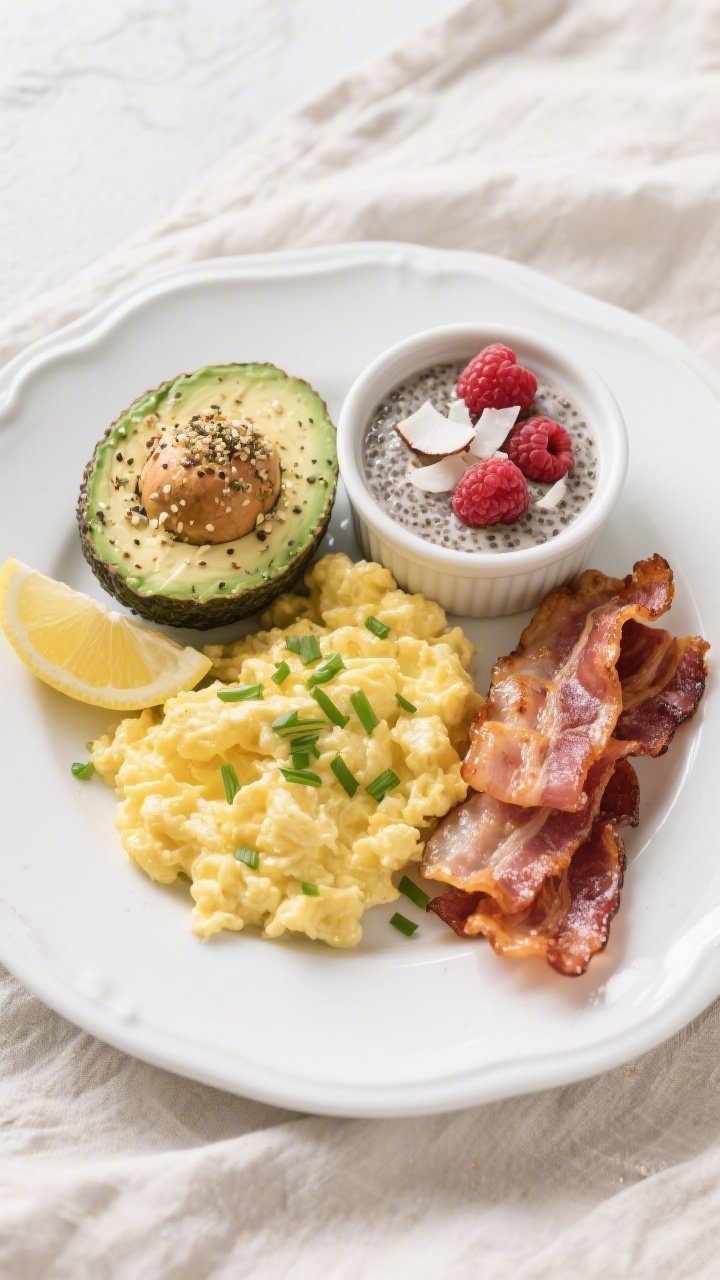
- Plate it up: Serve eggs with sautéed veggies, crisp bacon or sausage, and half an avocado seasoned with salt, pepper, and a squeeze of lemon.
- Quick variation – keto breakfast bowl: Layer sautéed greens, scrambled eggs, sliced avocado, and a few pieces of bacon.
Sprinkle with everything bagel seasoning and a drizzle of olive oil.
- Optional protein boost: Add smoked salmon with a squeeze of lemon and capers, or leftover shredded chicken warmed in the pan with paprika and olive oil.
Storage Instructions
- Chia pudding: Keeps 4–5 days in the fridge. Store in individual jars for grab-and-go portions.
- Cooked bacon/sausage: Refrigerate up to 4 days or freeze up to 2 months. Reheat in a skillet or air fryer to revive crispness.
- Sautéed veggies: Refrigerate 3–4 days.
Reheat in a pan with a little oil to avoid sogginess.
- Scrambled eggs: Best fresh. If needed, make a quick egg muffin batch for the week instead.
- Avocado: Slice fresh. If prepping ahead, store mashed avocado with lemon juice, pressed flat with plastic wrap to minimize browning.
Why This is Good for You
- Supports ketosis: Low net carbs help your body stay in fat-burning mode.
- Steady energy: Protein and healthy fats reduce mid-morning crashes and cravings.
- Nutrient-dense: Eggs, greens, and avocado bring vitamins A, D, K, B vitamins, choline, fiber, and potassium.
- Inflammation-friendly swaps: Using olive oil, salmon, and leafy greens adds omega-3s and antioxidants.
What Not to Do
- Don’t overload dairy: Too much cheese or heavy cream can stall progress and upset your stomach.
- Avoid hidden sugars: Check bacon, sausage, and non-dairy milks for added sugar or starches.
- Don’t skip salt: Keto can shift electrolytes.
Season food and consider adding a pinch of salt to water if needed.
- Don’t rely only on bacon: Mix in fish, chicken, or plant-based options for balance and variety.
- Don’t burn the eggs: Overcooked eggs turn rubbery and taste bitter. Gentle heat is key.
Alternatives
- Dairy-free: Use olive oil or ghee, skip cheese, and add avocado or a spoon of coconut yogurt for creaminess.
- Vegetarian: Swap bacon for halloumi, extra avocado, or a tofu scramble seasoned with turmeric and cumin.
- Nut-free: Use coconut milk instead of almond milk for chia pudding. Top with pumpkin or sunflower seeds.
- Spice lovers: Add jalapeño, hot sauce, chili crisp (low-sugar), or smoked paprika.
- No time: Make egg muffins with chopped veggies and bake in a tray.
Reheat in the morning with avocado on the side.
FAQ
How many carbs are in this breakfast?
It depends on portions and veggies, but a plate with eggs, bacon, sautéed greens, and half an avocado typically lands around 6–10 net carbs. Chia pudding adds about 3–5 net carbs per serving, depending on milk and toppings.

Can I meal prep the eggs?
Scrambled eggs are best fresh. For meal prep, make egg muffins or a crustless quiche.
Reheat gently to avoid rubbery texture.
Is fruit allowed on keto in the morning?
Small amounts of low-sugar berries are fine. Stick to raspberries, blackberries, or strawberries, and keep portions modest to stay within your carb goals.
What oil is best for cooking?
Use butter, ghee, or olive oil for most cooking. Avocado oil works well for higher heat.
Avoid seed oils if you prefer a more whole-food approach.
Can I skip breakfast on keto?
Yes. If you practice intermittent fasting, you can wait until lunch. When you do eat, aim for a balanced plate with protein, healthy fats, and non-starchy veggies.
What if I don’t like avocado?
Swap with olives, a handful of nuts or seeds, or a drizzle of olive oil for healthy fats.
You can also add a slice of cheese if you tolerate dairy.
How do I make it more filling?
Add an extra egg, include smoked salmon or chicken, or stir in cheese. You can also add chia or ground flax to yogurt alternatives for more fiber.
Can I use plant-based milk?
Yes, as long as it’s unsweetened. Almond, coconut, and macadamia milks work well for chia pudding and scrambling eggs.
Do I need special keto bread?
Not at all.
Focus on whole foods. If you miss toast, try a quick almond flour mug bread, but it’s optional.
How can I add more flavor without carbs?
Use herbs, lemon zest, vinegar splashes, everything bagel seasoning, smoked paprika, chili flakes, and quality salt. A little hot sauce can also brighten the plate.
In Conclusion
Keto breakfasts can be quick, flavorful, and genuinely satisfying with the right building blocks.
Keep eggs, a good protein, greens, and healthy fats on hand, and you’ll always have options. Prep chia pudding and cooked meats ahead to save time. With these simple recipes and swaps, you can start your day nourished and stay on track with your goals—no fuss required.