
If you’re curious about keto and want a straightforward way to get started, you’re in the right place. This guide walks you through the essentials so you can burn fat, feel energized, and keep meals simple. No fads or confusion—just clear steps, practical tips, and foods you actually want to eat.
You’ll learn what to buy, what to cook, and how to make it work day to day. Ready to get results without overthinking it? Let’s go.
Why This Recipe Works
Keto is built on a simple idea: lower carbs, higher fat, and moderate protein.
That shift helps your body use fat for fuel, which can lead to steady weight loss and fewer energy crashes. It also keeps your meals satisfying, so you’re less likely to snack mindlessly. With clean ingredients and a smart balance of fat, protein, and fiber, you’ll feel full and focused while keeping carbs low.
What You’ll Need
- Proteins: Eggs, chicken thighs, salmon, ground beef (80/20), bacon, sausage (no added sugar), tofu, or tempeh
- Fats: Avocado, olive oil, coconut oil, grass-fed butter or ghee, full-fat mayo, heavy cream
- Low-Carb Veggies: Spinach, kale, arugula, zucchini, cauliflower, broccoli, bell peppers, asparagus, mushrooms
- Flavor Boosters: Garlic, lemon, fresh herbs, chili flakes, salt, pepper, vinegar, mustard
- Dairy (optional): Cheddar, mozzarella, Parmesan, cream cheese, Greek yogurt (full-fat, unsweetened)
- Nuts and Seeds: Almonds, walnuts, pecans, chia seeds, flaxseed, pumpkin seeds
- Pantry Staples: Bone broth, low-sugar tomato sauce, coconut milk, sugar-free pickles, olives
- Sweetener (optional): Erythritol, stevia, or monk fruit
Step-by-Step Instructions
- Set Your Macros: Aim for roughly 70% of calories from fat, 20–25% from protein, and 5–10% from carbs.
Keep net carbs around 20–30 grams per day to start.
- Clear the Carbs: Remove bread, pasta, rice, sugary snacks, most cereals, and sweet drinks. This step reduces temptation and helps you switch to fat-burning faster.
- Stock Up Smart: Buy proteins, healthy fats, and low-carb vegetables. Keep quick options on hand: eggs, pre-washed greens, rotisserie chicken, and frozen cauliflower rice.
- Build a Simple Plate: Choose one protein, one low-carb veg, and one fat source.
Example: Salmon + roasted broccoli + buttered cauliflower mash.
- Start With Easy Meals:
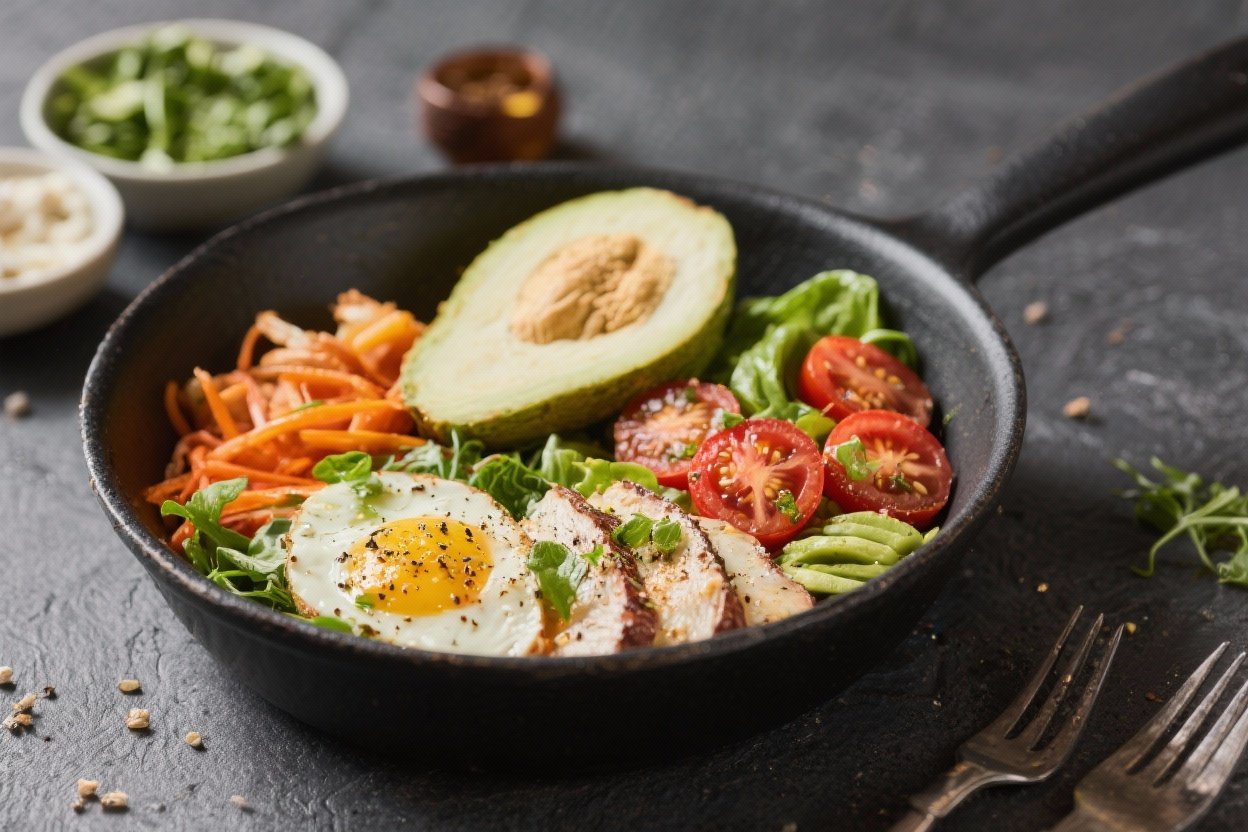
- Breakfast: Scrambled eggs in butter with avocado and spinach.
- Lunch: Chicken salad with olive oil, olives, and arugula.
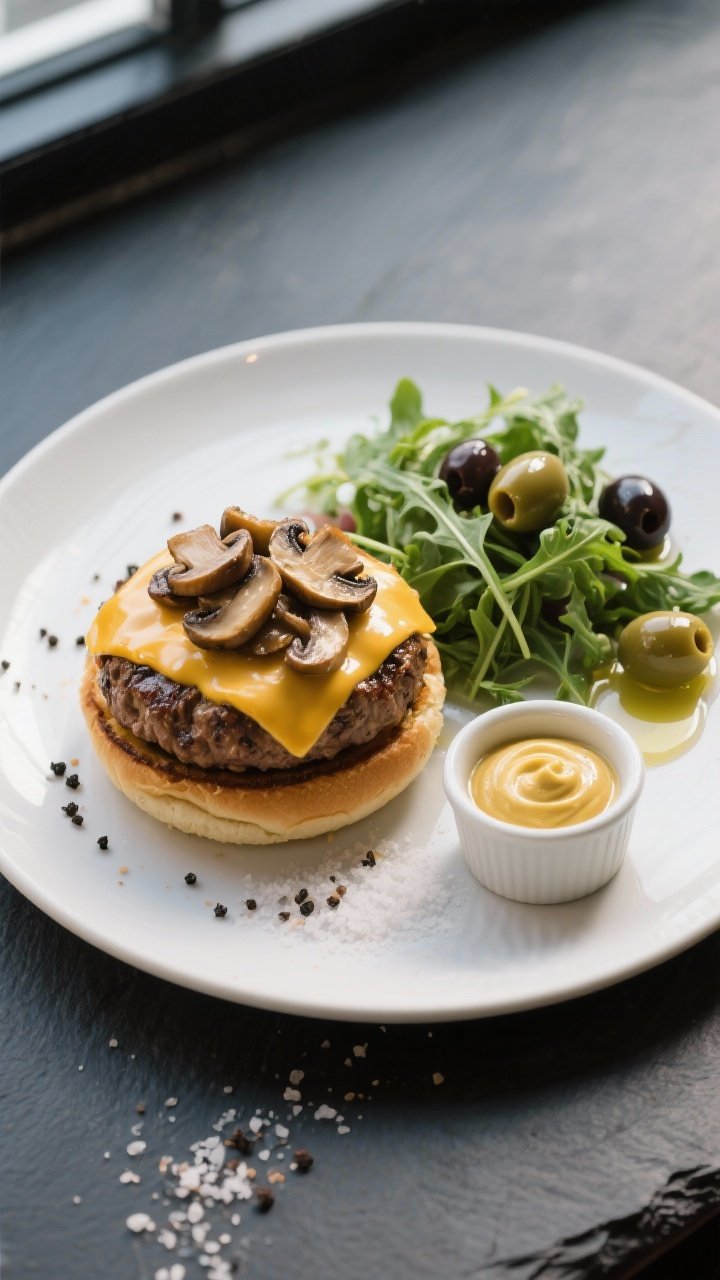
- Dinner: Bunless burger with cheese, sautéed mushrooms, and a side salad.
- Hydrate and Add Electrolytes: Drink water and add salt to taste. Consider magnesium and potassium from foods like avocado, leafy greens, and nuts.
- Cut Hidden Sugars: Check labels for dextrose, maltodextrin, and added sugars in sauces, deli meats, and dressings.
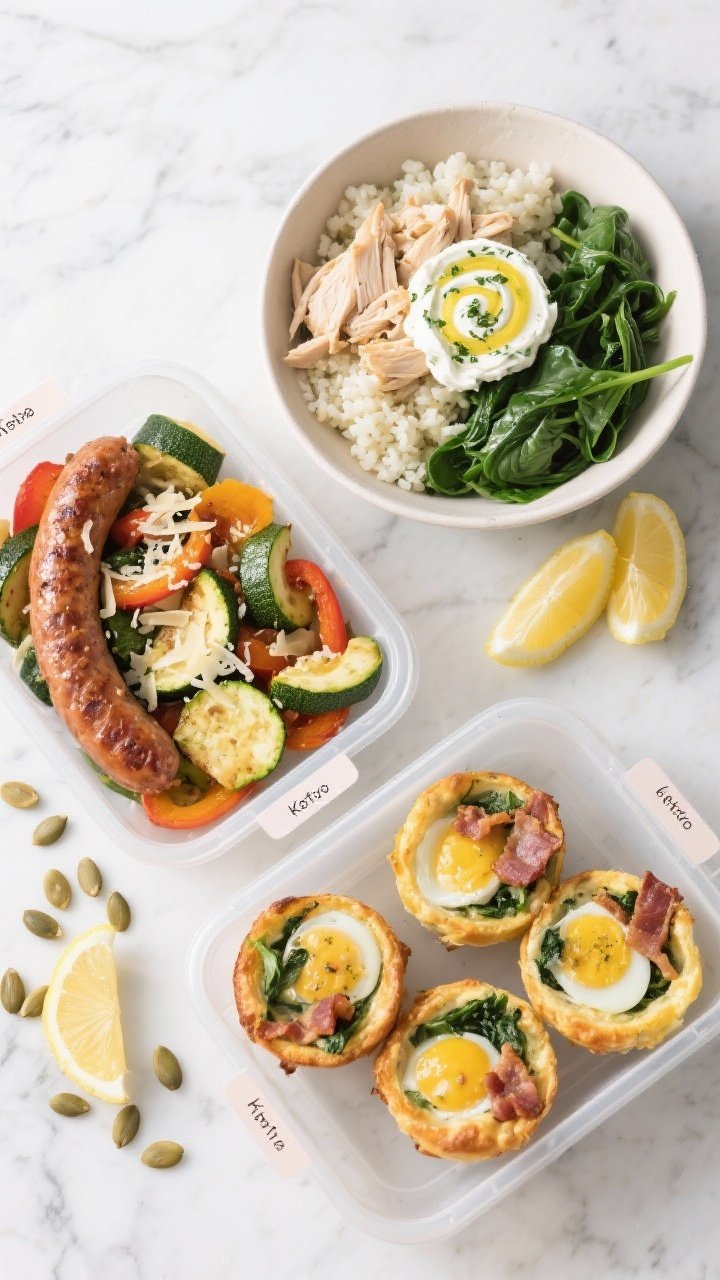
- Meal Prep Lightly: Batch-cook proteins and vegetables twice a week. Store in containers so you can assemble meals in minutes.
- Ease Into Exercise: Walk daily and add light strength training.
It supports fat loss and keeps energy steady.
- Track and Adjust: If weight loss stalls, reduce nuts, dairy, and keto treats. Keep meals simple and watch portions of calorie-dense fats.
How to Store
- Cooked Proteins: Refrigerate 3–4 days, freeze up to 3 months. Portion before freezing.
- Roasted Veggies: Refrigerate 3–4 days.
Reheat in a skillet or air fryer for best texture.
- Cauliflower Rice: Refrigerate 3–4 days, freeze up to 2 months. Sauté straight from frozen.
- Dressings and Sauces: Olive oil–based dressings last 1–2 weeks chilled. Shake before using.
- Snack Packs: Pre-portion nuts, cheese, olives, and celery sticks for grab-and-go options.
Why This is Good for You
- Stable Energy: Lower carbs and steady fat intake help avoid blood sugar spikes and crashes.
- Natural Appetite Control: Protein and fat keep you full, which can reduce cravings.
- Simple Whole Foods: Fewer ultra-processed carbs often means better digestion and fewer bloating issues.
- Supports Weight Loss: By limiting carbs, your body shifts toward using stored fat for fuel.
Pitfalls to Watch Out For
- Too Many “Keto Treats”: Bars and snacks can stall progress.
Stick to real food most of the time.
- Not Enough Electrolytes: Low sodium, magnesium, and potassium can cause headaches and fatigue. Salt your food and eat leafy greens and avocados.
- Overdoing Dairy and Nuts: Easy to overeat. Measure portions if your progress slows.
- Hidden Carbs: Sauces, dressings, and processed meats often contain sugar or starch.
- Impatience: The first week can feel rough as your body adapts.
Give it 7–14 days to find your groove.
Recipe Variations
- One-Pan Skillet: Brown sausage in olive oil, add zucchini and peppers, finish with Parmesan.
- Creamy Chicken Bowl: Shredded chicken, cauliflower rice, spinach, and a spoon of cream cheese with lemon and herbs.
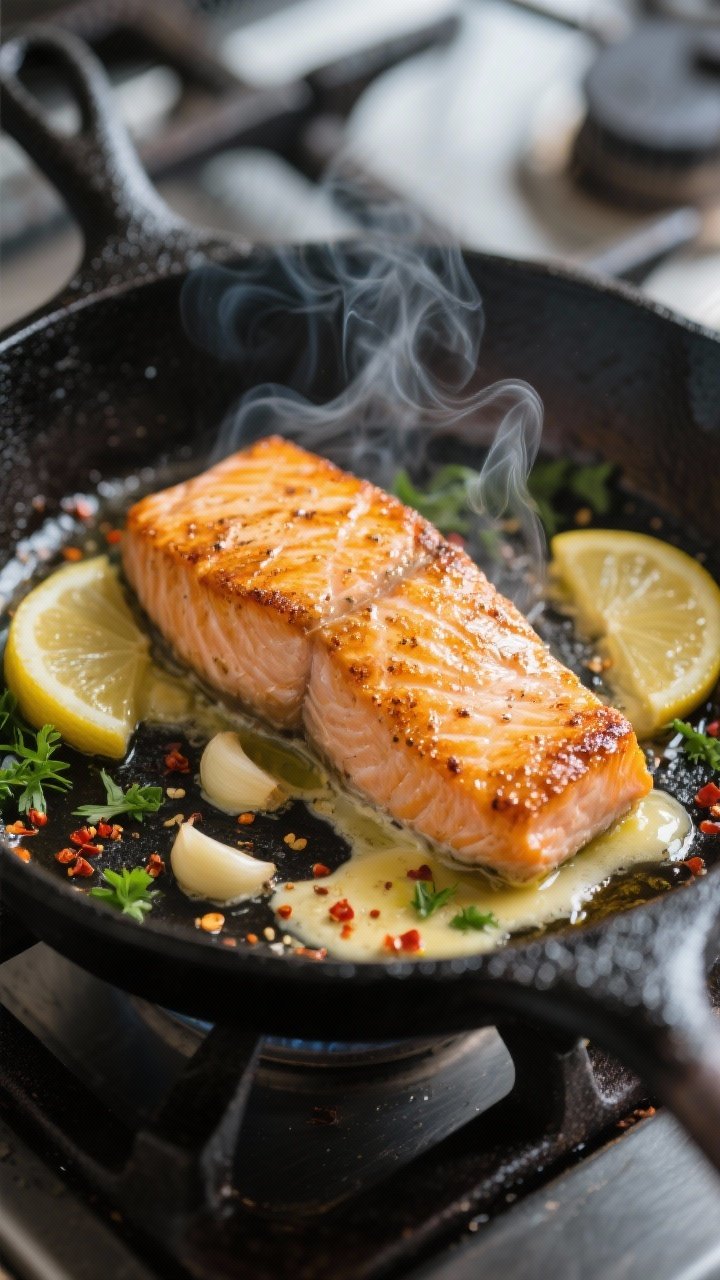
- Salmon and Greens: Pan-seared salmon with garlic butter, served over arugula with a squeeze of lemon.
- Veggie Keto: Tofu stir-fry with coconut aminos, mushrooms, broccoli, and sesame oil.
- Egg Muffins: Whisk eggs, cheese, spinach, and bacon; bake in a muffin tin for easy breakfasts.
FAQ
How many carbs should I eat per day on keto?
Most people do well with 20–30 grams of net carbs per day. If you’re active, you might tolerate a bit more, but start low for best results.
How long until I see results?
Some notice changes in the first week from water loss and reduced bloat. Fat loss often picks up after 2–3 weeks as your body adapts.
What can I drink?
Water, sparkling water, black coffee, and unsweetened tea are all great.
Add a splash of heavy cream if you like. Avoid sugary drinks and most juices.
Do I need to count calories?
Not always at first. Focus on low carbs, enough protein, and healthy fats.
If progress stalls, track portions for a week to recalibrate.
Can I exercise on keto?
Yes. Walking, lifting, and light cardio work well. Give yourself a week or two to adjust, then increase intensity as energy improves.
What about fiber?
Get fiber from leafy greens, chia seeds, flaxseed, avocado, and low-carb veggies.
These help digestion and keep you fuller.
Is fruit allowed?
Stick to lower-carb options like berries in small portions. Avoid high-sugar fruits like bananas, mangoes, and grapes.
How do I handle eating out?
Choose protein and veggies, ask for butter or olive oil, skip the bread and fries, and request sauces on the side.
What if I feel tired at first?
It’s common during the transition. Drink more water, add electrolytes, and make sure you’re eating enough fat and protein.
Is keto safe long-term?
Many people follow a well-formulated low-carb diet long-term.
If you have medical conditions or take medications, consult your healthcare provider before starting.
Wrapping Up
Keto doesn’t have to be complicated. Keep carbs low, choose real foods, and build simple meals with protein, veggies, and healthy fats. Stay hydrated, watch hidden sugars, and prep a few basics each week.
With consistent habits and a calm approach, you can lose weight naturally and feel great—without turning your life upside down.
Printable Recipe Card
Want just the essential recipe details without scrolling through the article? Get our printable recipe card with just the ingredients and instructions.